Chart · Our World in Data
ChartOur World in Data
Gini coefficient: World Inequality Database vs. World Bank
The Gini coefficient measures inequality on a scale from 0 to 1. Higher values indicate higher inequality. Data from World Inequality Database refers to income measured after taxes and benefits. Depending on the country and year, World Bank data relates to income measured after taxes and benefits or consumption.
Copy actions record publisher intent only. They do not confirm publication, citation or a backlink.
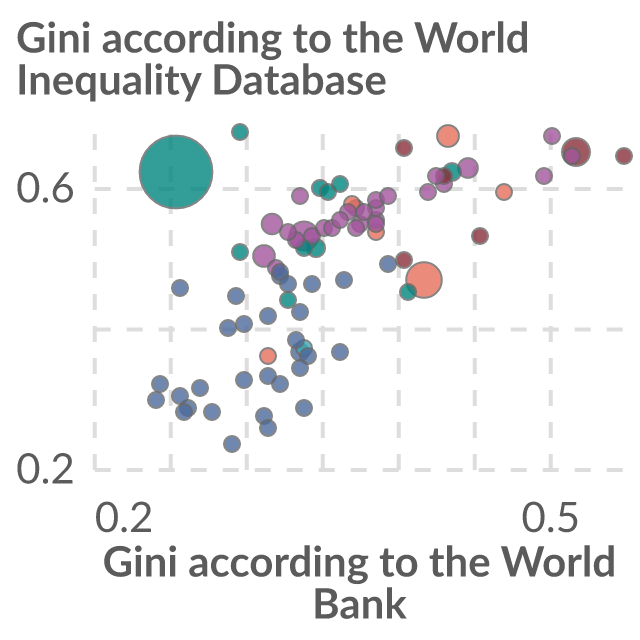
Data visualization loaded directly from Our World in Data.
Reuse conditions
Usage rights
- Source-hosted embed use
- Commercial use
- Modification
- Attribution
- Citation
- Raw-data redistribution
Chart and embed permission is separate from raw-data redistribution. The raw dataset is not included in this marketplace asset unless that right is explicitly marked allowed.
View rights evidencePublisher workflow
Exact citation
World Inequality Database (WID.world) (2026); World Bank Poverty and Inequality Platform (2026)
Attribution: World Bank Poverty and Inequality Platform
Source-hosted only
Embed instructions
<iframe src="https://citesupply.com/e/gini-coefficient-wid-vs-pip" title="Gini coefficient: World Inequality Database vs. World Bank" loading="lazy" referrerpolicy="strict-origin-when-cross-origin" sandbox="allow-scripts" style="width:100%;height:720px;border:0;display:block"></iframe>
Embeds stay hosted by the source. Cite Supply records an aggregate iframe-load signal before redirecting to the reviewed source embed; it does not proxy or republish the chart.