
PreviewSubmitted image
ChartOur World in Data
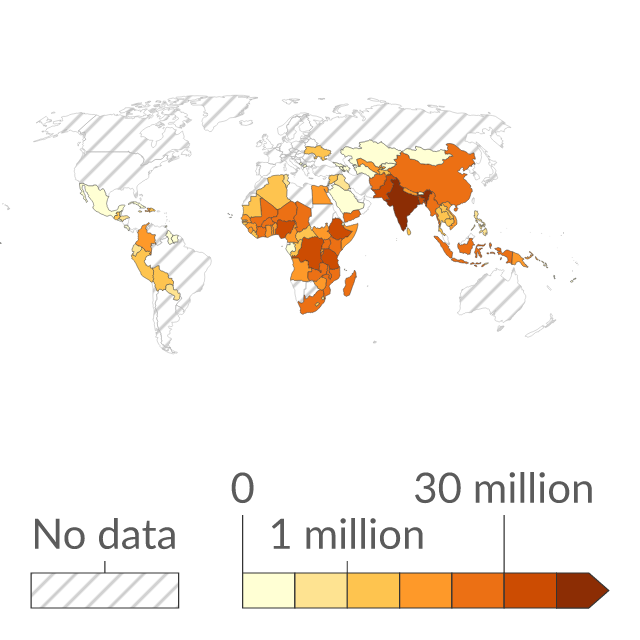
Rural population without basic handwashing facilities
Number of people living in rural areas without access to a handwashing facility (a sink or tap) with soap and water available at home.
Where publishers find data.
Source links, freshness and reuse rights stay visible on every result.
Number of people living in rural areas without access to a handwashing facility (a sink or tap) with soap and water available at home.
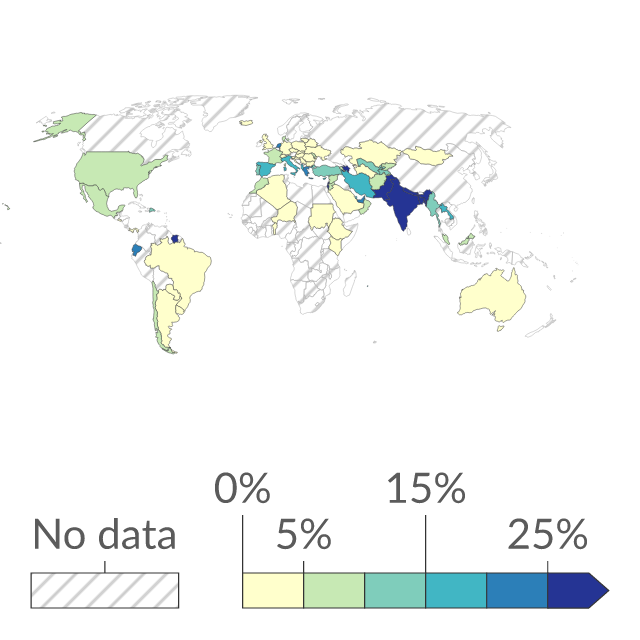
The percentage of total agricultural land area which is irrigated (i.e. purposely provided with water), including land irrigated by controlled flooding. Agricultural land is the combination of crop (arable) and grazing land.
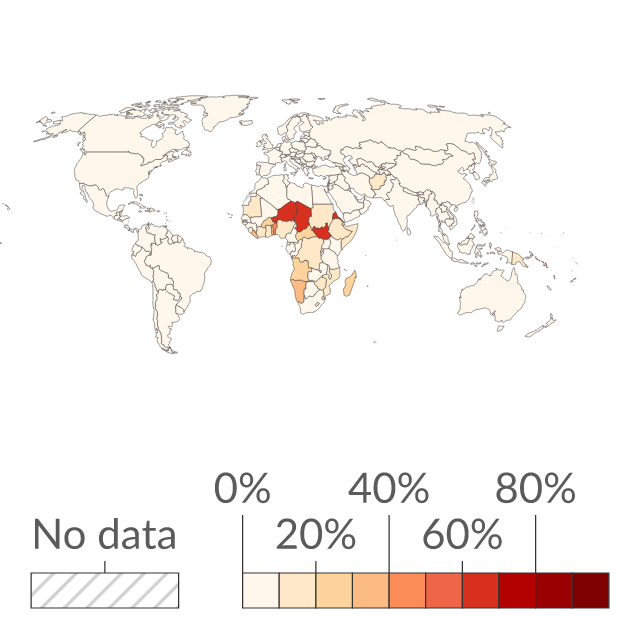
Open defecation refers to defecation in fields, forests, bushes, bodies of water, or other open spaces. This indicates a lack of safe sanitation infrastructure and poses risks, such as drinking water contamination and the spread of diseases.
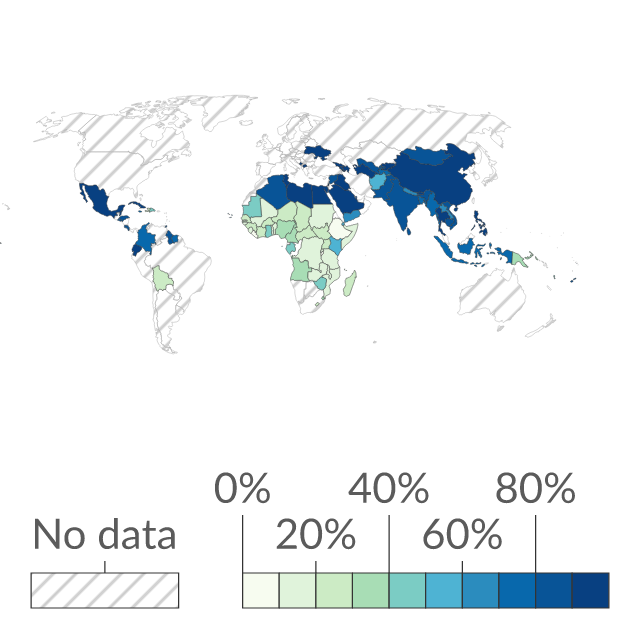
The percent of people who have access to basic handwashing facilities, including water and soap, at home.
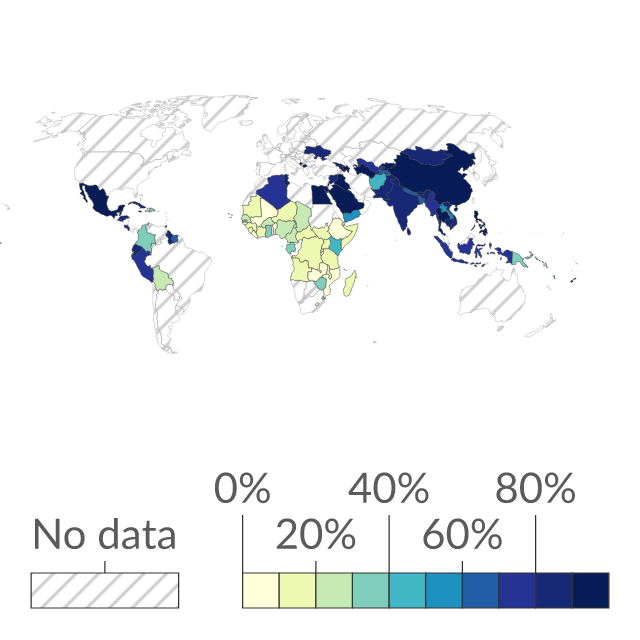
Access to basic handwashing facilities means there is a place to wash ones hands with soap and water available on the premises.
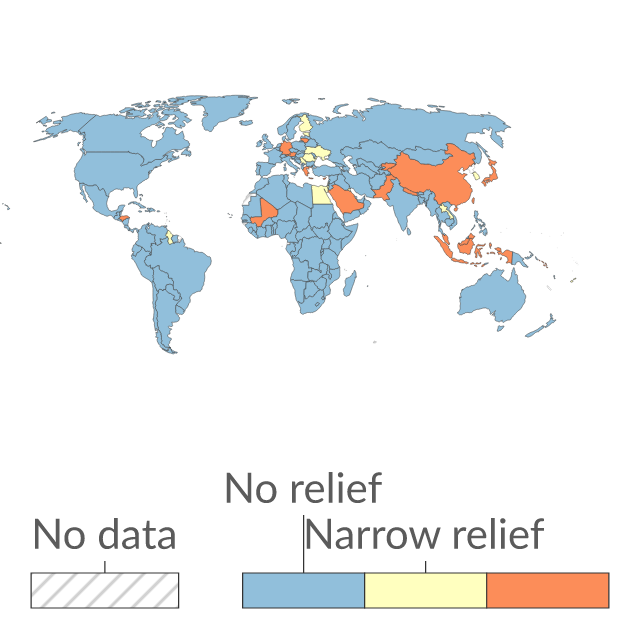
Debt or contract relief captures if the government is freezing financial obligations during the COVID-19 pandemic, such as stopping loan repayments, preventing services like water from stopping, or banning evictions.
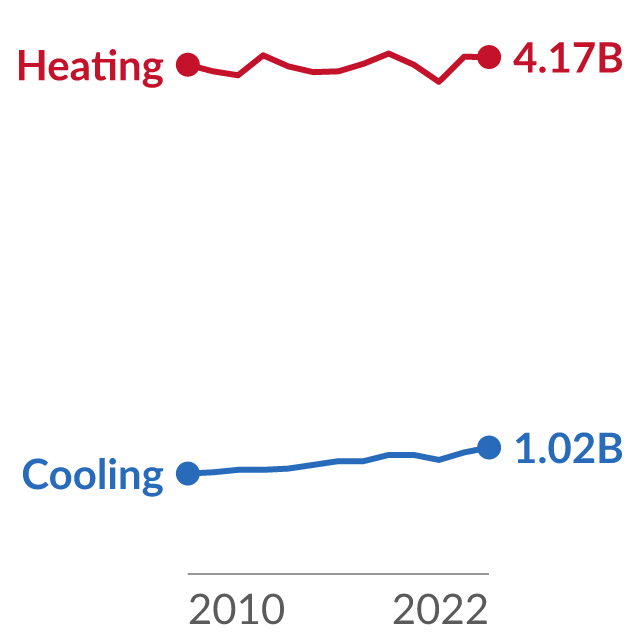
Measured in tonnes of carbon dioxide equivalents. Heating includes space and water heating. Emissions from cooling — mostly air conditioning — measure emissions from electricity consumption but do not include refrigerants used in AC units.
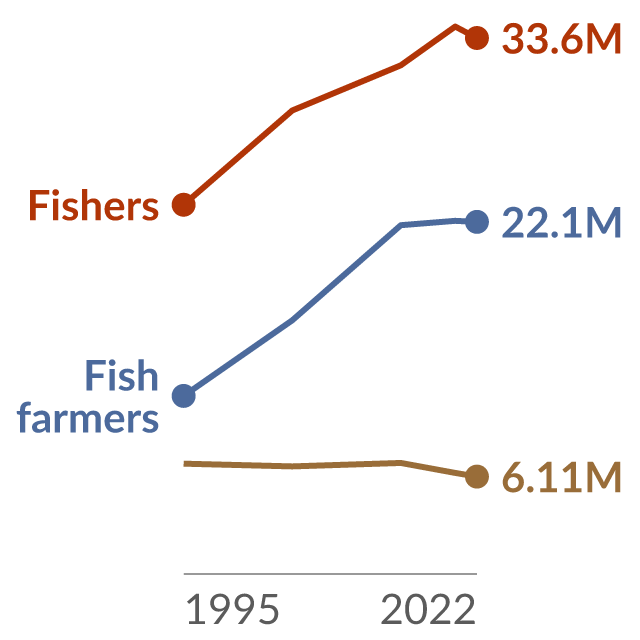
People employed in capture fishing (inland and marine waters) or fish farming (aquaculture). 'Unspecified' refers to people employed in either of those, but for whom the specific subsector is unknown.
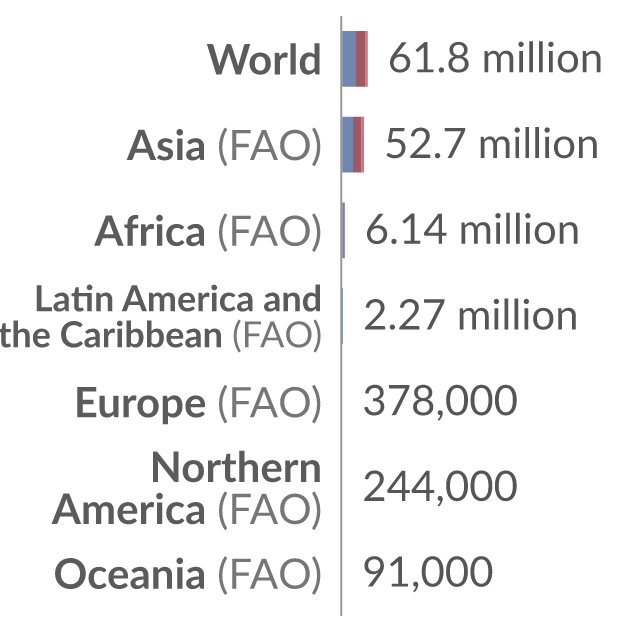
People employed in capture fishing (inland and marine waters) or fish farming (aquaculture). 'Unspecified' refers to people employed in either of those, but for whom the specific subsector is unknown.
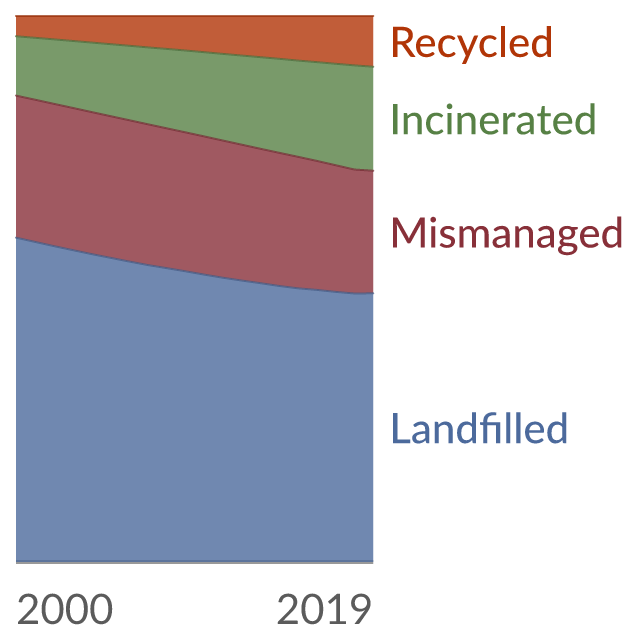
Mismanaged plastic waste includes materials burned in open pits, dumped into seas or open waters, or disposed of in unsanitary landfills and dumpsites.
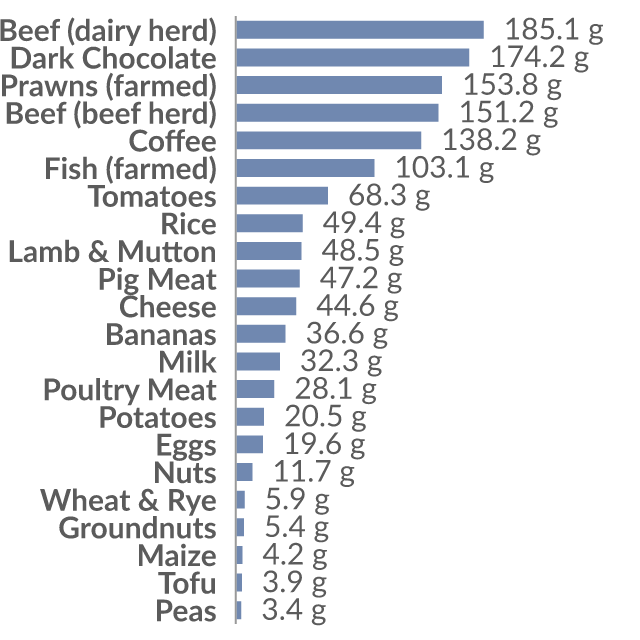
Eutrophying emissions represent runoff of excess nutrients into the surrounding environment and waterways, which affect and pollute ecosystems. They are measured in grams of phosphate equivalents (PO₄eq).
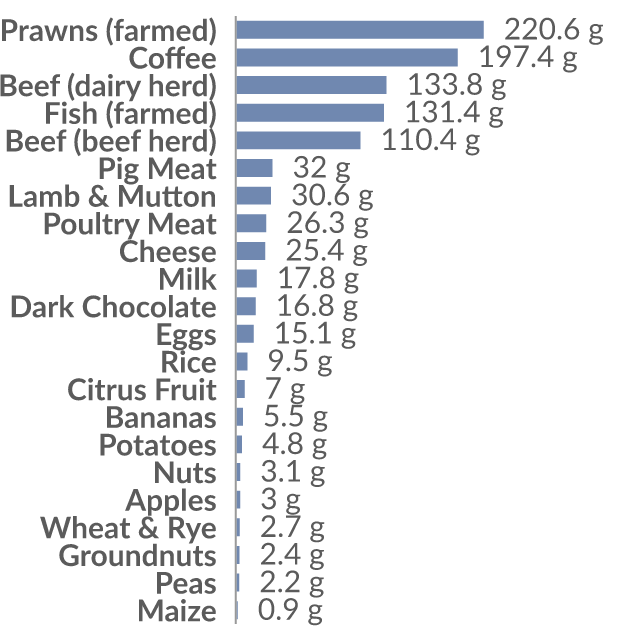
Eutrophying emissions represent runoff of excess nutrients into the surrounding environment and waterways, which affect and pollute ecosystems. They are measured in grams of phosphate equivalents (PO₄eq).
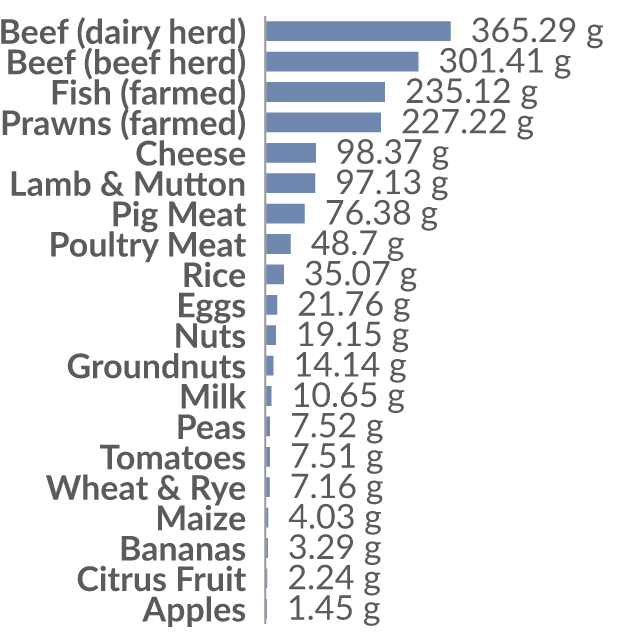
Eutrophying emissions represent runoff of excess nutrients into the surrounding environment and waterways, which affect and pollute ecosystems. They are measured in grams of phosphate equivalents (PO₄eq).
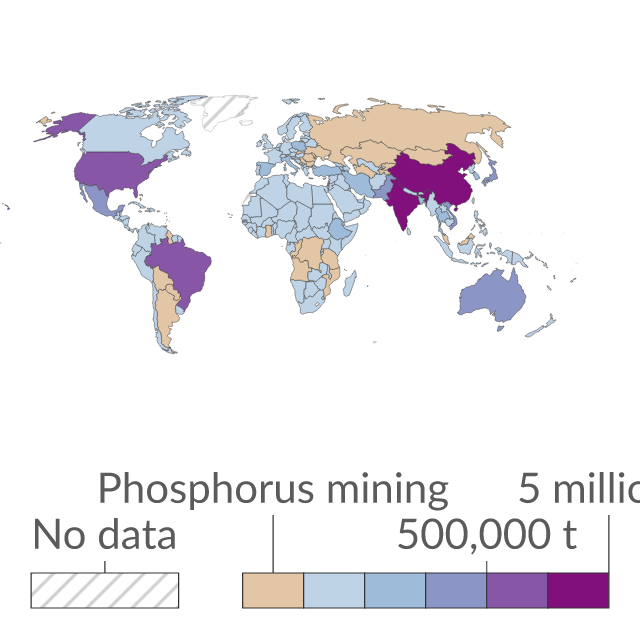
"Excess phosphorus" is the difference between nutrient inputs (from fertilizers and manure) and the amount harvested in crop material. This represents phosphorus that is lost to the environment and can create ecological imbalances on ecosystems and in water bodies.
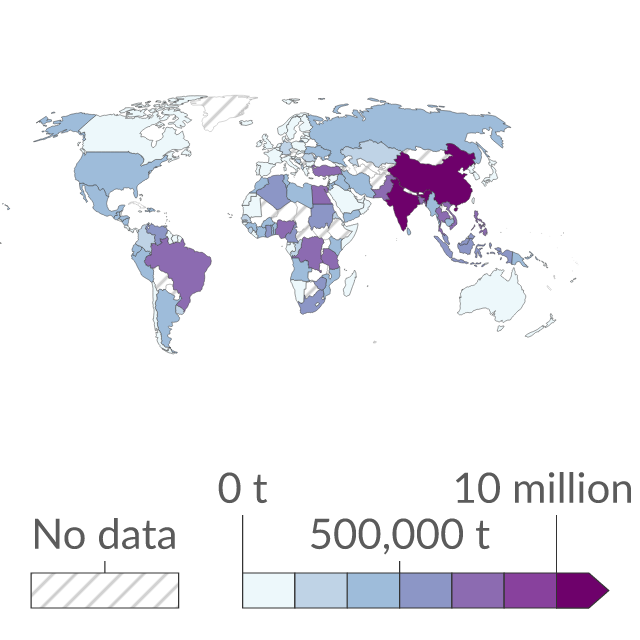
Mismanaged plastic waste is waste that is not recycled, incinerated, or kept in sealed landfills. It includes materials burned in open pits, dumped into seas or open waters, or disposed of in unsanitary landfills and dumpsites.
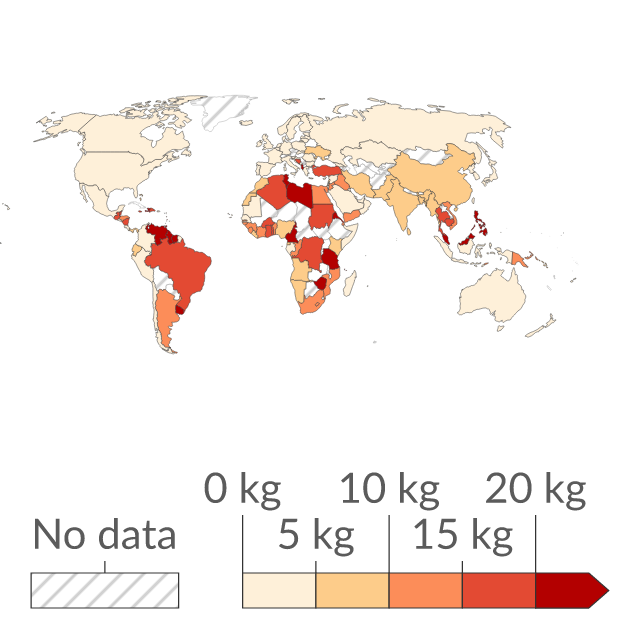
Mismanaged plastic waste is waste that is not recycled, incinerated, or kept in sealed landfills. It includes materials burned in open pits, dumped into seas or open waters, or disposed of in unsanitary landfills and dumpsites.
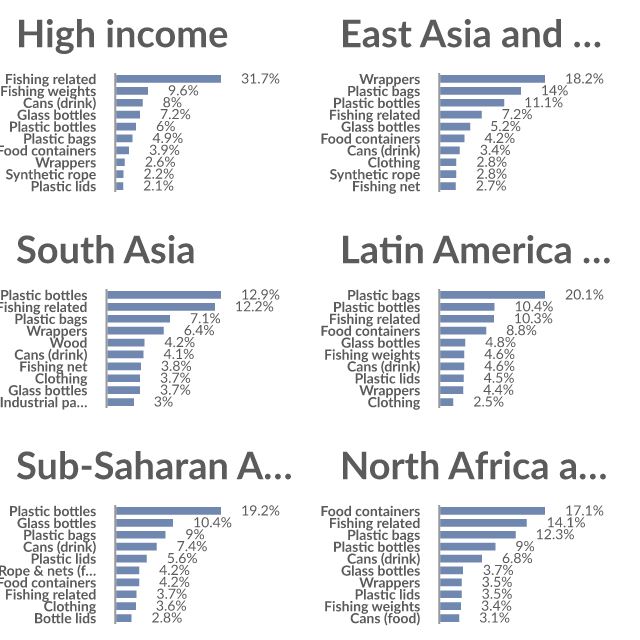
Each item's share of total litter in nearshore waters, which are within 100 kilometers of the coast.
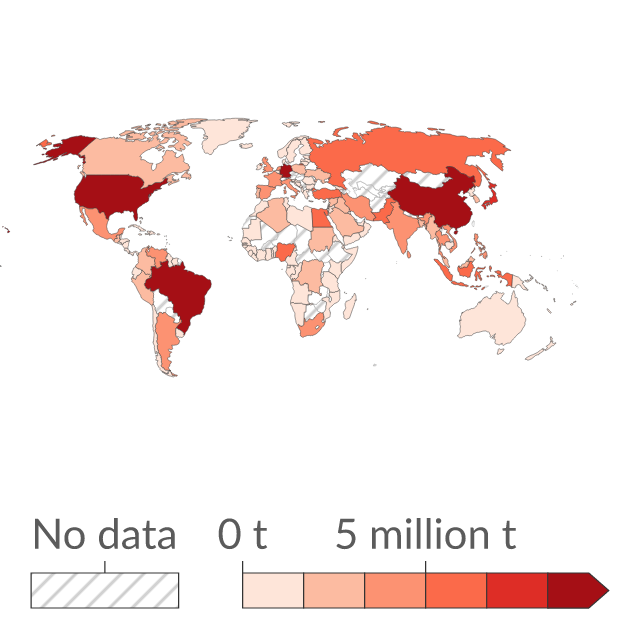
This measures total plastic waste generation prior to management and therefore does not represent the quantity of plastic at risk of polluting waterways, rivers and the ocean environment.
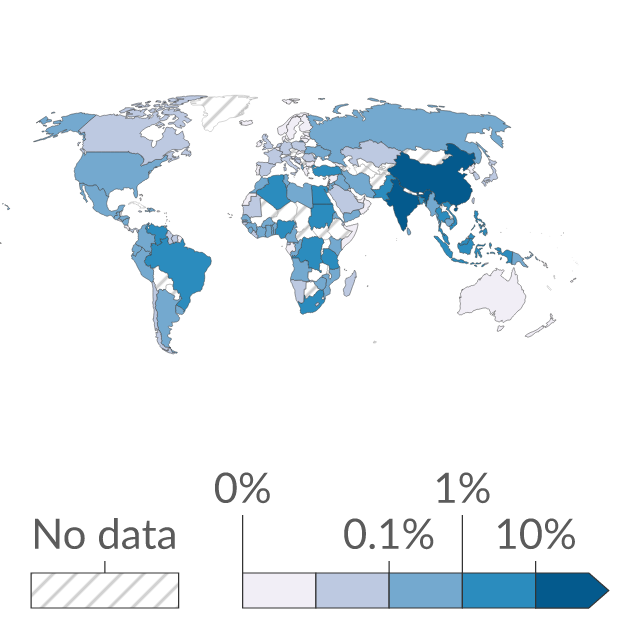
Mismanaged plastic waste is waste that is not recycled, incinerated, or kept in sealed landfills. It includes materials burned in open pits, dumped into seas or open waters, or disposed of in unsanitary landfills and dumpsites.
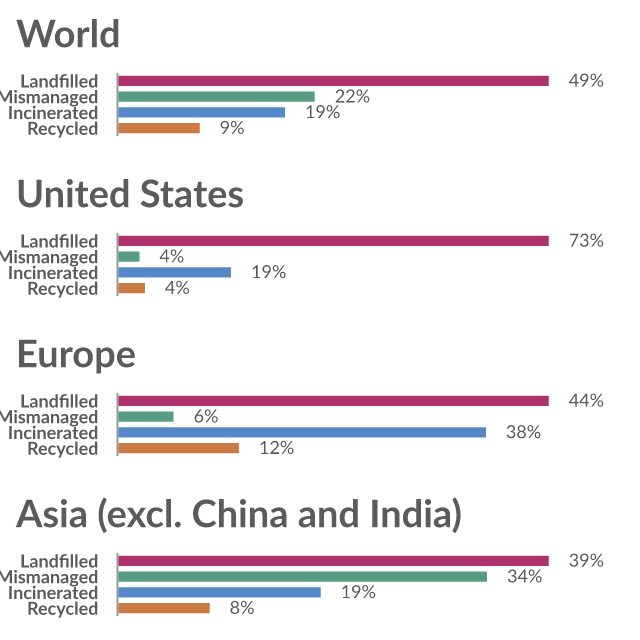
Mismanaged plastic waste includes materials burned in open pits, dumped into seas or open waters, or disposed of in unsanitary landfills and dumpsites.
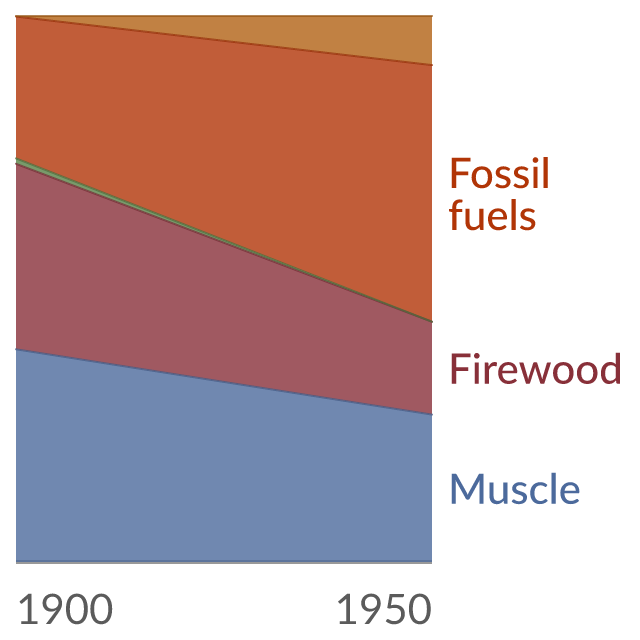
Share of energy production by traditional energy carrier, measured as the percentage of total energy production, from 1850-2000. "Muscle energy corresponds to the input of food by men and working animals; firewood to the actual consumption; wind and water have been estimated from the power of water and wind engines – sailing ships included – and the time, per year, these engines were in use”.
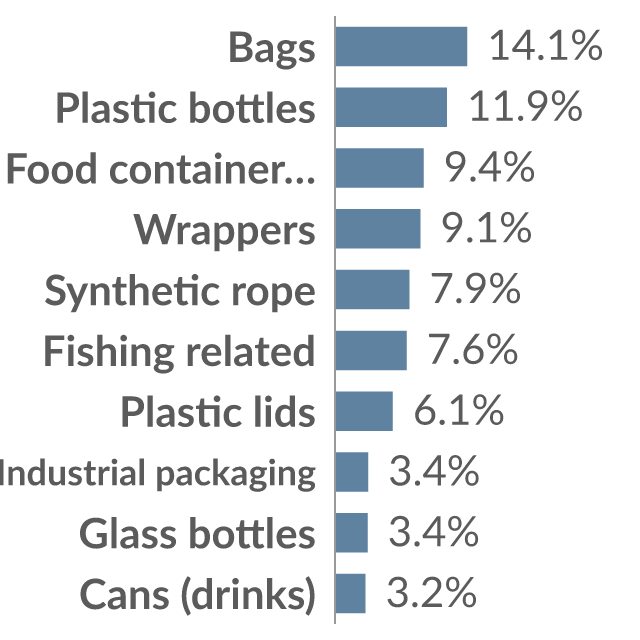
Each item's share of total litter in aquatic environments, including rivers, shorelines and offshore waters.
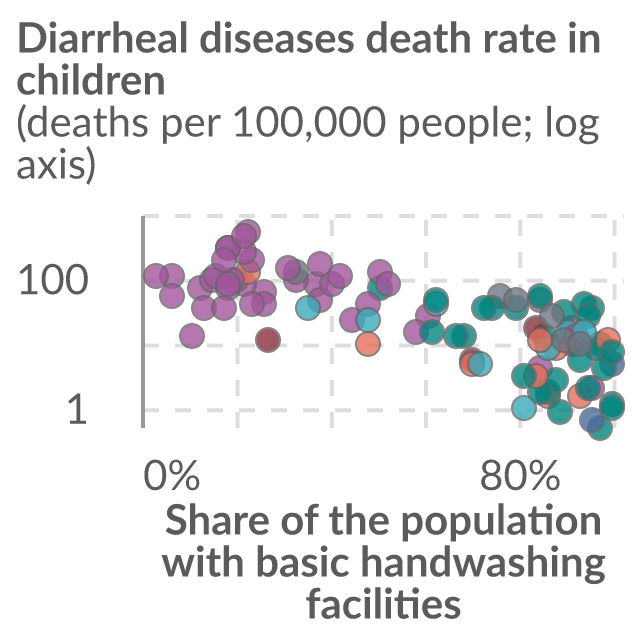
Estimated annual number of deaths from diarrheal diseases per 100,000 children under five, versus the percentage of people with access to basic handwashing facilities, including soap and water.
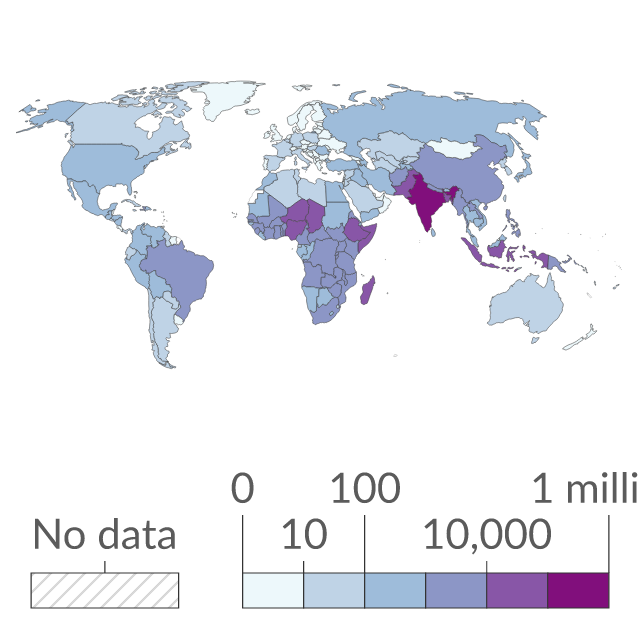
Estimated annual number of deaths attributed to unsafe sanitation. Here the attributable burden is the number of deaths that would no longer occur if the entire population had access to high-quality piped water.